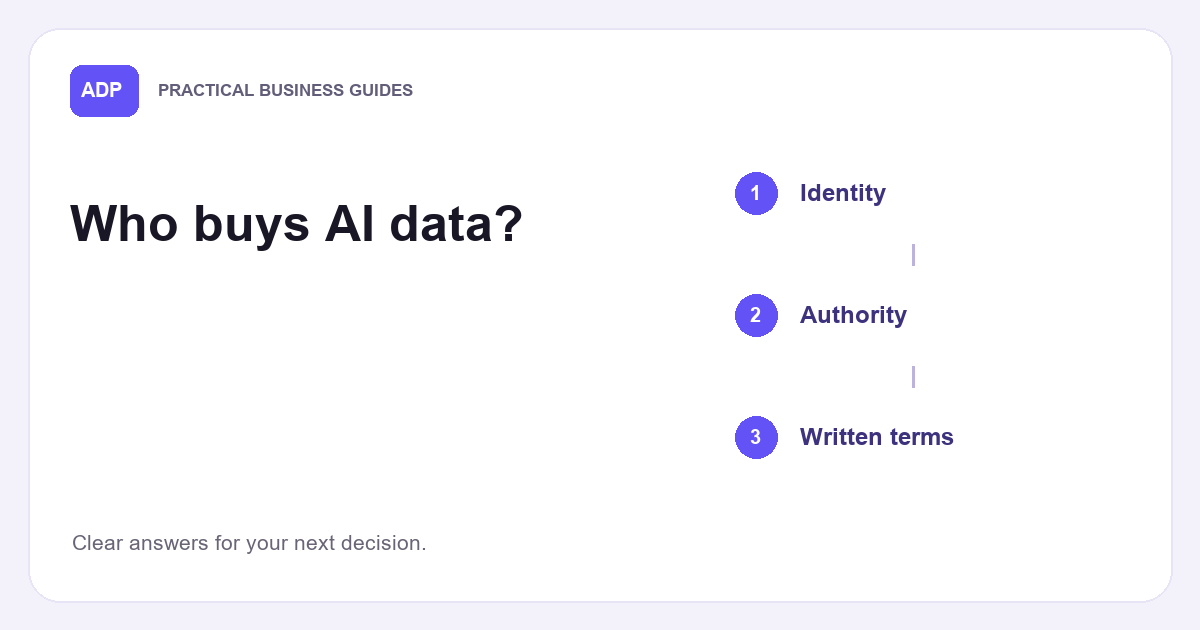
The useful question isn’t just who wants your records. It’s which organisation will use them, which legal entity will sign and what must happen before any files move. Data buyers may be developers, firms building their own tools or companies sourcing material for someone else. Check each role separately before judging an approach.
A model developer might license material for training or evaluation. The person approaching you might instead be an independent introducer, with no authority to promise a licence. ADP works in that introduction role and is independent of buyers. Treat an introduction as a chance to ask questions, not evidence that a proposed use has been approved.
Which organisations use licensed data?
If you’re looking to sell your company data, start by asking what the organisation actually plans to do with it. Data buyers could be building a product, testing a system for their own operations or obtaining material for another firm. The same records can raise different permission questions depending on that answer.
An enterprise AI team may want examples that reflect a particular workflow, such as how maintenance jobs are categorised. That doesn’t mean it needs your whole archive. Ask what task the proposed records would support and whether the organisation intends to develop a tool for its own staff or a product used by others.
A data supplier may collect, prepare and license material to developers rather than build a model itself. Ask whether it already has the right to offer the material it describes and what it would do with yours. Its ability to prepare a useful dataset says nothing, by itself, about its authority to license your records.
How does the sourcing chain work?
Some data buyers approach owners directly. Others use a sourcing intermediary to find businesses with potentially relevant records. Ask the contact to draw the chain in plain terms: who introduced whom, who would assess suitability, who would receive any material and who would pay. If a name is missing, pause before discussing specific records.
Find out whether the organisation making contact is also the end user. If it isn’t, ask who instructed it and whether that organisation knows about the enquiry. An adviser may need a client’s permission before making an introduction too. Our guide for advisers introducing clients covers that separate conversation.
Ask data buyers whether the proposed licence would allow sub-licensing to another organisation. A firm assessing your records for its own project is different from one seeking rights to pass them along. Put any proposed recipients and their uses in writing so you can judge the full chain, not just the first conversation.
Who will sign the agreement?
The contracting party is the legal person who would sign, rather than just a familiar brand or a person’s job title. For a registered company, ask for its registered name, number and address, then compare those details with an independently found company record. Confirming registration does not prove the sender represents it or can make this offer.
Confirm company identity through a contact route you found yourself, rather than a telephone number supplied in an unsolicited message. Ask the organisation to recognise the particular enquiry and explain any trading name, subsidiary or agent involved. Keep a note of who confirmed what, because a genuine employee may still be speaking outside their remit.
Before negotiating with data buyers, identify who on each side can approve terms. A researcher may describe a project but be unable to bind their employer. Your operations manager may understand the files but lack permission to license them. Keep the discussion exploratory until the right decision makers can review the proposed agreement.
What use is the organisation requesting?
Check your own licensing authority before promising a use. Records can contain photographs, reports or other material whose rights belong elsewhere. Government guidance on copyright permission explains why possession of a copy isn’t the same as permission to license its protected content. Check confidentiality and existing contracts separately.
Ask data buyers to describe the permitted purpose in terms you could recognise later: which records, for what project, by which organisations and for how long. ‘AI development’ is too broad to test against those limits. If evaluation and training are both proposed, ask whether each is allowed and what happens if the project changes.
Where records contain personal data, identify the parties’ roles, the lawful basis for sharing and what happens to the data afterwards. The ICO’s guidance on data sharing agreements treats purpose, parties and handling arrangements as matters to document. Pseudonymised data can remain personal data, and a licence doesn’t itself settle privacy obligations.
How should a sample request be checked?
Hypothetical worked example: A maintenance firm is asked for five past fault tickets to show how its records are structured. That’s a sample request for actual content, even if the sender calls it a quick quality check. The owner first offers field names and a made-up row, then asks what test an actual ticket would serve.
If data buyers still need a real sample, agree what it must demonstrate before selecting anything. Set the smallest scope, name its recipient and decide who inside your business must approve disclosure. Only then consider a secure transfer method, with agreed access and deletion arrangements. Don’t treat an unexpected upload link as that agreement.
Review the proposed extract itself, not just the process around it. Removing names from a ticket may leave identifying details in a location, date or unusual incident description. Check third-party material and contractual restrictions too. If a safe extract cannot answer the stated question, say so rather than supplying a larger one.
What makes payment terms meaningful?
Ask data buyers what their acceptance criteria would actually measure. A request for relevant records is not a commitment to license them. Written terms should distinguish an initial review, approval of a sample and acceptance of a final delivery. If the buyer can reject material, ask how it will explain a rejection and what happens to copies already received.
A payment trigger should identify the event that makes an amount due, who decides it happened and when payment follows. ‘Payable on successful use’ leaves too much open if use is never defined. Compare the proposed trigger with the work and costs you would incur before it, including review, preparation and any agreed delivery.
Read an exclusivity clause against the uses you still need to make of your own records. Does it prevent licensing the same material elsewhere, supplying a different extract or using it internally? Ask about its scope and duration before agreeing a price. A broad restriction may matter more to your business than the first proposed payment.
Which claims need written evidence?
With data buyers, separate a verifiable fact from a sales claim. The legal entity, its representative’s remit and the proposed recipient can each be checked through an independent channel. Confidentiality terms may govern what the parties say publicly, but they’re not a reason to leave the owner unsure who would receive or use its records.
If someone says they are authorised to source material for another organisation, ask what that authority covers and request confirmation through a route the organisation controls. Don’t assume an agent can approve a licence, set a price or commit another firm to review records. An impressive presentation isn’t a substitute for those answers.
Keep a short decision record before taking the next step with data buyers: confirmed identities, unresolved claims, intended use, proposed recipients and terms still to be negotiated. Proceed with a limited conversation if the chain is clear, pause for a specific missing answer or decline if a material claim cannot be confirmed.
How does an ADP introduction work?
ADP can facilitate an introduction, but it doesn’t receive company datasets, approve eligibility or offer a licence. Your business decides whether it agrees to be introduced. That business permission is separate from the lawful basis for sharing any personal data and from confidentiality, copyright and contract authority. The business and buyer agree any licence themselves.
If someone has a referral interest, a clear referral disclosure lets you understand their role before agreeing to contact. ADP also provides a paid information course and a portal for learning about introductions. That course isn’t model engineering training, and buying it doesn’t mean a buyer will accept records or that anyone will earn money.
If you’re deciding whether an introduction fits your business, ADP’s information for businesses is a sensible next read. Use it to understand the introduction process, then keep your own checks on the proposed counterparty, records and terms. Those decisions remain yours even when the first contact comes through an introducer.
Frequently asked questions
Does a company register entry prove a buyer’s message is genuine?
No. It helps you check that an entity exists, not that the sender represents it. Confirm the particular enquiry through a contact route you found independently.
Can I send a redacted sample after checking the buyer’s identity?
Identity is only one check. Agree the sample’s purpose and recipient, then review privacy, confidentiality, copyright and contract restrictions before deciding whether any extract can be shared.
Does an introduction from ADP mean a buyer has approved my records?
No. ADP is independent of buyers and cannot approve eligibility or offer a licence. The business and buyer decide whether to agree terms.